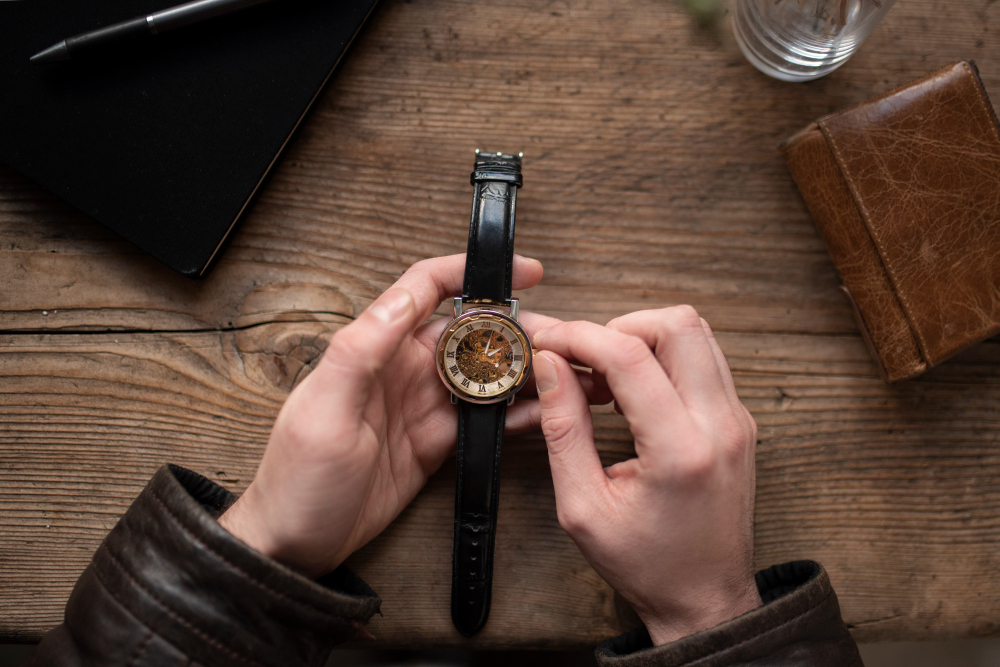
What Causes a Mechanical Watch To Stop Working

What Causes a Mechanical Watch To Stop Working?

Ever experienced the frustration of glancing at your wrist only to find your beloved timepiece has stopped ticking? Unlike their automatic watch counterparts, mechanical watches possess a captivating intricacy that relies on precise engineering. But what causes these marvels of craftsmanship to come to a sudden halt?

From worn-out mainsprings to dust accumulation, the reasons may surprise you. Before rushing to the watch repair shop, consider the inner workings of your quartz watch.

Join us as we delve into the fascinating world of mechanical timepieces, exploring the common reasons behind their temporary pause, empowering you to make informed decisions about their care and maintenance.

#1 Reason – Overwinding

Overwinding stands as a primary culprit when a mechanical watch suddenly ceases its graceful dance of timekeeping. Watch winding is the delicate act of winding the mainspring—a crucial component fueling the watch’s movement.

While winding a mechanical watch should be done with care, overzealous turns of the crown can lead to a tense mainspring, akin to stretching a rubber band beyond its limits. This excess tension strains the delicate inner mechanisms, risking damage or even breakage. In some cases, a watch may have a defective winding mechanism, exacerbating the risk.

Understanding the balance between winding and the watch’s capacity is paramount to its longevity. Thus, while the allure of winding may beckon, moderation remains the guiding principle in ensuring your timepiece continues its rhythmic journey uninterrupted.

Read related article: How To Wind an Automatic Watch: A Guide for Watch Enthusiasts

#2 Reason – Damaged Balance Wheel

The balance wheel is the heartbeat of a watch movement, orchestrating its precise rhythm with each measured swing.

However, when this delicate component sustains damage, the harmonious cadence of timekeeping can falter. Watchmakers often encounter scenarios where a watch stopped working due to a damaged balance wheel, a common issue for second hand watches.

Despite its small size, the balance wheel plays a monumental role in regulating the watch’s accuracy, acting as a pendulum to ensure consistent timekeeping.

Yet, impacts or mishandling can distort its delicate equilibrium, disrupting the meticulous interplay of gears and springs within the movement. Understanding the vulnerability of this intricate mechanism underscores the importance of gentle care and regular maintenance to safeguard against potential disruptions in your timepiece’s unwavering march through time.

#3 Reason – Impact Damage

There are times when we inadvertently subject our cherished timepieces to unforeseen perils, a risk compounded by their constant presence on our wrists. That’s why you don’t wear them while engaging in high-impact activities.

The consequence of such negligence can manifest in impact damage, causing the watch to suffer unforeseen trauma. Unlike watches that suddenly stopped due to internal complications, impact damage often leaves visible marks—a scratched case, a dented bezel, or a cracked crystal.

The delicate rotor, crucial for automatic movements, is particularly susceptible to misalignment or damage under such circumstances.

Recognizing the vulnerability of these intricate mechanisms underscores the importance of mindful wear, ensuring your timepiece remains both a functional marvel and an enduring symbol of craftsmanship.

Read related article: How Does a Quartz Watch Work? History, Movement, And More

#4 Reason – Broken Rotor

Another reason why your watch might not be working lies in the realm of wear and tear – a phenomenon that affects even the smallest components of these intricate timepieces. Unlike manual watches, automatic watches rely on a rotor to harness the natural motion of the wearer, translating it into energy to power the movement.

However, prolonged use or mishandling can lead to a broken rotor, disrupting the delicate ballet of gears and springs working together in perfect harmony. Whether it’s a misaligned pivot or a crack in the rotor’s structure, the repercussions are felt throughout the entire mechanism.

Understanding that every element of a mechanical watch movement is dependent on one another highlights the necessity of regular servicing to mitigate the risk of such failures and ensure your timepiece continues to grace your wrist with reliable precision.

Tips to Keep Your Mechanical Watch Running

  • Wind your watch regularly: Regularly winding your mechanical watch ensures the mainspring remains tensioned, keeping the movement active and accurate.
  • Service your watch every four to five years: Have your watch serviced every four to five years to help prevent issues caused by wear and tear, ensuring optimal performance and longevity.
  • Understand winding requirements: Knowing when to wind your watch is crucial. If your watch hasn’t been serviced recently or your watch not working properly, winding the mainspring manually can often revive it.
  • Keep it fully wound: A fully wound mainspring maintains consistent power delivery to the movement, enhancing timekeeping accuracy and preventing premature stoppage.

Keep Your Mechanical Watch in Their Pristine Condition

Now that you know the intricacies behind what causes your watch to stop running, from overwinding to impact damage and broken rotors, you’re equipped with the knowledge to safeguard your timepiece. Remember, regular winding and professional servicing every four to five years are essential practices to maintain its smooth operation.

Whether it’s the delicate balance wheel or the resilient mainspring, every component plays a vital role in keeping your watch ticking accurately. By understanding and respecting these mechanisms, you can ensure that your cherished timepiece remains a reliable companion, faithfully marking the moments of your life’s journey.


Posted

in

by

Tags:

Comments

Leave a Reply

Your email address will not be published. Required fields are marked *